
How to Assure Your Roof Safety After Storms
Sydney storms can expose weaknesses across the entire roof system. Strong wind, heavy rain and falling debris may shift tiles, loosen roofing components, fill gutters or turn an existing minor defect into a water-entry point.
Some storm damage is immediately visible. Other problems only become noticeable during the next rainfall, when water begins entering the roof cavity or overflowing from a drainage system that can no longer cope.
Safety Notice: Avoid climbing onto a wet or potentially damaged roof. SafeWork NSW recommends controlling fall risks and working from ground level where reasonably practicable. Professional assessment is appropriate when roof access is required. SafeWork NSW
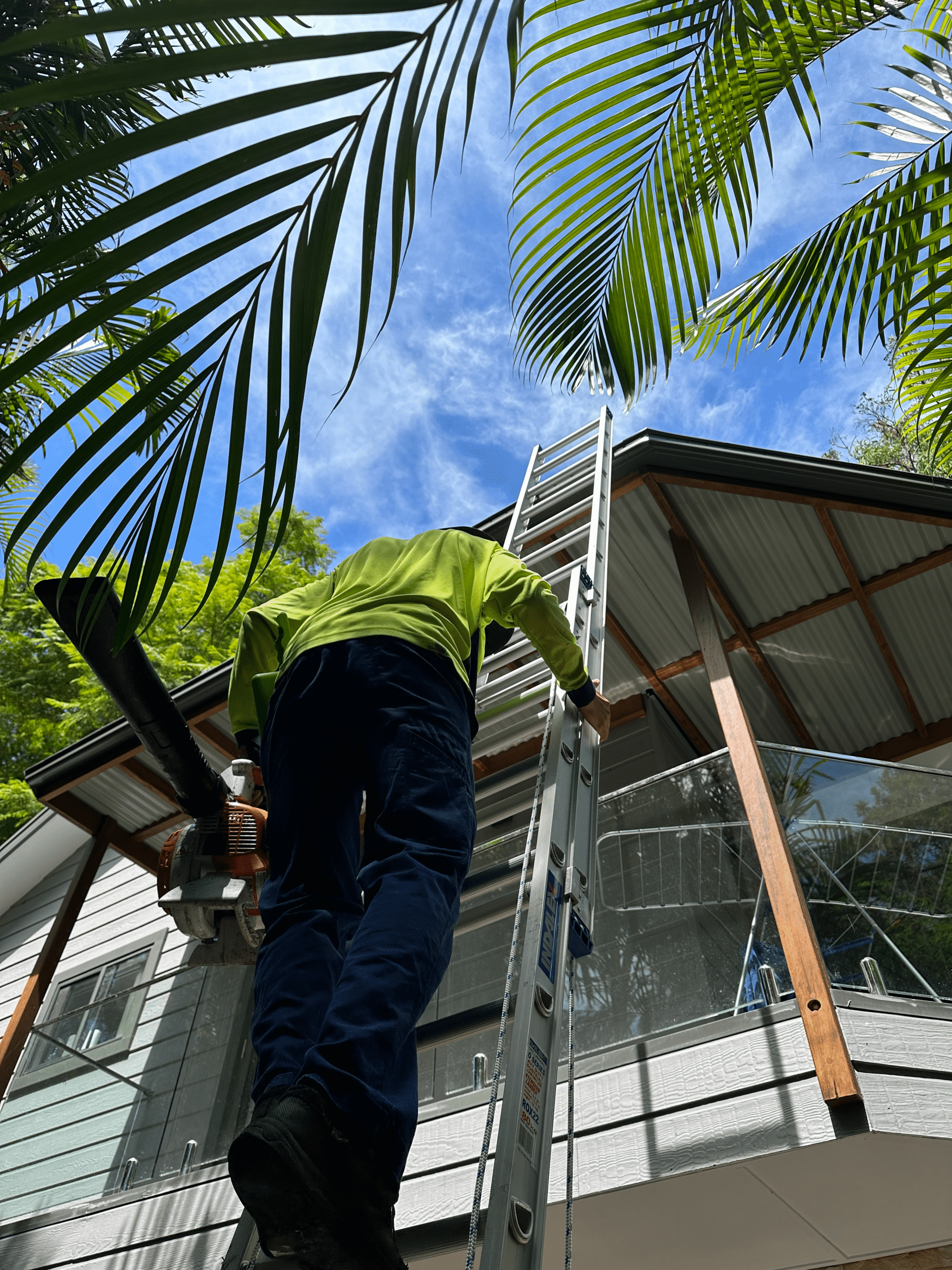
1. What Should You Check To Assure The Roof Safety After Storm
Start with a visual inspection from the ground. Look for displaced roofing, damaged gutters, fallen debris and signs of water entry without climbing onto a potentially wet or damaged roof.
After the weather has cleared and it is safe to go outside, walk around the property and compare the roof with how it normally looks. NSW SES recommends checking roofs for leaks and damage, including loose tiles, metal sheets and screws.
From ground level, look for:
- Cracked, shifted or missing tiles, or lifted metal roofing
- Loose flashing, ridge capping, roofing screws or fasteners
- Fallen branches, storm debris or roof sections that appear uneven
- Sagging or detached gutters and visibly damaged downpipes
The inside of the property can provide additional clues. Check ceilings and upper walls for new water marks, damp areas, bubbling paint or active dripping. A roof may appear normal from the ground while water has entered through a cracked tile, deteriorated flashing, damaged ridge area or another vulnerable point.
Avoid climbing onto the roof to investigate. Wet surfaces, displaced tiles, weakened materials and damaged fixings can increase fall risk. A ground-level inspection is for identifying warning signs, not confirming that every roof component is safe.
2. Why Should Gutters and Downpipes Be Checked After a Storm?
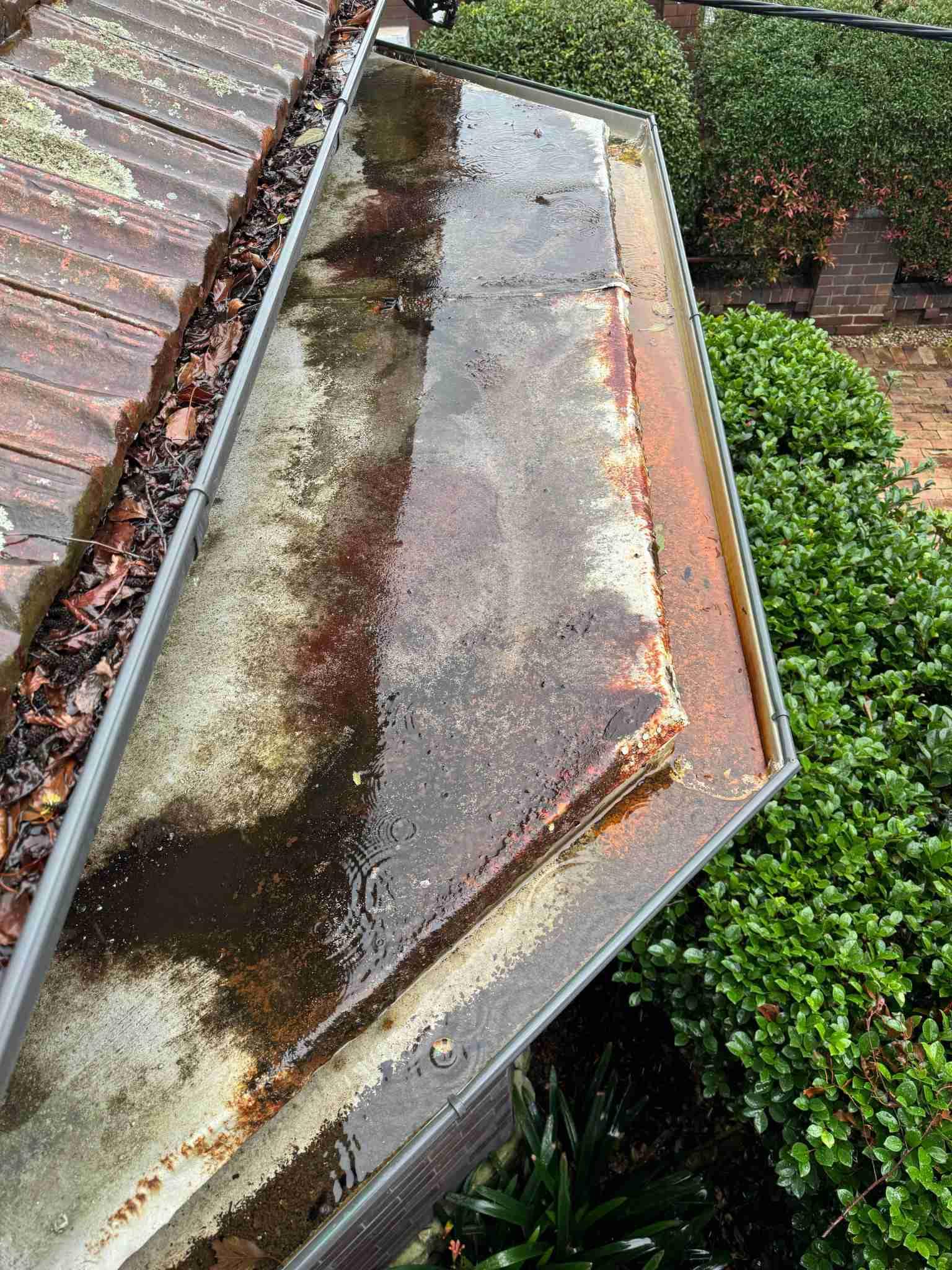
Storm debris can quickly restrict gutters, valleys, outlets and downpipes, causing rainwater to back up or overflow instead of being directed safely away from the roof.
Your roof and gutters work as one drainage system. Even when the roofing itself survives a storm without obvious damage, leaves, bark, branches and dirt can be blown onto the roof and carried towards valleys and gutters.
After a storm, check for:
- Gutters packed with leaves, bark, twigs or storm debris
- Debris concentrated around gutter outlets
- Blocked or restricted roof valleys
- Slow-draining or visibly restricted downpipes
- Standing water inside gutter sections
- Water overflowing over or behind the gutter line
- Gutters sagging or pulling away from the fascia
- Repeated overflow from the same drainage point
NSW SES recommends keeping gutters, downpipes and drains clear because blockages can trap water and cause it to overflow beneath the eaves and potentially enter the roof cavity.
If conditions are safe, observe the gutter from ground level during the next rainfall. Water should travel towards the downpipes rather than spilling over the edge, escaping behind the gutter or remaining in one section after the rain stops.
Repeated overflow may indicate more than debris. The gutter may be sagging, the outlet may be restricted or the downpipe may need further assessment. Professional gutter cleaning in Sydney can be particularly useful after storms that deposit significant vegetation across the roof.
3. When Does a Roof Need a Professional Inspection After a Storm?
A professional roof inspection is appropriate when damage is visible, water has entered the property, drainage problems persist or the roof cannot be safely assessed from ground level.
Storm damage is not always dramatic. A tile may crack without falling from the roof, ridge pointing can deteriorate or separate, flashing can move slightly, roofing screws may loosen, and a roof valley can become obstructed while remaining largely hidden from the street.
A post-storm assessment may need to examine cracked or displaced tiles, ridge capping and pointing, flashing, roof valleys, metal sheets and fasteners, gutters and outlets, downpipe flow, signs of water entry and visible deterioration around previous repairs.
Arrange assessment sooner if you notice an active roof leak, new ceiling stains, missing roofing, gutters pulling away from the fascia, significant storm debris, persistent overflow, damaged flashing or visible cracked tiles.
If significant property damage may involve an insurance claim, contact your insurer promptly and confirm what documentation is required before arranging non-emergency repairs.
The objective of an inspection should be to establish what was damaged, what remains serviceable, and what actually needs attention.
4. How Can You Prepare Your Roof Before the Next Storm?
The most effective storm preparation is preventative maintenance: keep drainage clear, repair existing roof defects and address components that are already deteriorating before severe weather tests them again.
A storm often reveals problems that were already developing. A partially blocked gutter may cope with ordinary rain but overflow during a downpour. A small crack may remain unnoticed until wind-driven rain reaches it. A loose tile or deteriorated ridge section may become more vulnerable under strong weather conditions.
A practical roof-maintenance plan can include:
- Regular gutter, valley and downpipe cleaning;
- Checking cracked or displaced tiles;
- Inspecting ridge capping and pointing;
- Repairing damaged or leaking gutter sections;
- Checking metal roofing screws and fasteners;
- Removing accumulated roof debris;
- Assessing flashing and other common water-entry points; and
- Considering gutter guard where heavy vegetation repeatedly creates blockages.
Preventative maintenance is not about replacing everything that looks old. It is about identifying small defects that could affect drainage or weather resistance, then prioritising the work that genuinely needs to be completed.
Depending on the property, that may mean gutter cleaning and replacing a few damaged tiles, or it may require gutter repairs, repointing, flashing work or more extensive roof repairs in Sydney.
Need Your Roof Checked After a Storm?
If your property has recently experienced severe weather and you have noticed roof debris, overflowing gutters, water stains, displaced tiles or another change, Magic Gutter can inspect the roof and gutter system to identify visible areas that require attention.
Our Sydney roof and gutter services include roof inspections, roof repairs, gutter cleaning, gutter repairs and replacement, ridge capping and repointing, gutter guard installation and preventative maintenance. We can also provide before-and-after photographs and roof and gutter condition reporting as part of the service process.
The aim is to distinguish between what needs attention now, what should be planned for later, and what remains in suitable condition.
For a roof and gutter assessment in Sydney, contact Magic Gutter on 0488 850 865 for a free quote.
- Awarded Professional Roof & Gutter Assessments Across Sydney.
- Fully Insured & Working at Heights Certified Team.
- Detailed Before & After Roof & Gutter Photo Documentation.
- Complimentary Roof & Gutter Condition Reports.
- Roof Repairs for Tiles, Ridge Capping, Flashing & Storm-Damaged Areas.
- Gutter Cleaning, Drainage Checks & Preventative Maintenance.
- Trusted by Residential, Commercial & Strata Properties.
- 5-Star Rated Roof & Gutter Service Across Sydney.
Would you like to speak with a professional? Reach out now →
Frequently Asked Questions
Is it safe to inspect your roof yourself after a storm?
A visual ground-level inspection is appropriate, but avoid climbing onto a wet or potentially damaged roof. Professional assessment is safer where roof access is necessary.
What are common signs of roof damage after a storm?
Missing or displaced tiles, damaged flashing, roof debris, leaking ceilings, sagging gutters, overflowing drainage and new water stains can all indicate a problem.
Should gutters be cleaned after a storm?
They should be checked for storm debris. Leaves, branches and dirt can restrict gutters, valleys, outlets and downpipes, particularly after strong winds.
Can a roof be damaged even if it is not leaking?
Yes. Cracked tiles, displaced flashing, loose roofing components and drainage restrictions may exist before obvious internal water damage becomes visible.
When should I call a roofer after a storm?
Professional assessment is appropriate when you notice leaks, displaced roofing, damaged gutters, persistent overflow or any condition that cannot be safely assessed from ground level.
Please reach us at info@magicgutter.com.au if you could not find an answer to your question.
Do I Need To Be Home During Any Service?
Magic Gutter offers the convenience of roofing services without requiring you to be present at home. Since your roof is separated from the interior of your home, it is unnecessary for us to get in there for any job. As long as we have access through the unlocked side gate and a designated green bin for debris disposal, we can handle the entire process without your presence.
Are you fully insured?
Yes, Magic Gutter is fully insured with public liability insurance so you can have peace of mind knowing you’re covered when our gutter cleaning sydney employees are at work on your residence.
What payment methods do you offer?
We accept cash, EFTPOS and credit card payments with VISA, Mastercard or Bank transfer. We do not accept buy now, pay later or services like Afterpay
Will you clean up your mess?
Certainly, our policy is to ensure that your property is left in as good, if not better, condition than we found it. We take care to remove any accumulated debris from the site, leaving your grounds tidy and well-maintained.
How Can I Schedule A Gutter Cleaning Service With Magic Gutter?
To schedule a gutter cleaning sydney service with Magic Gutter, you can contact us by phone: 0488 850 865 or email: info@magicgutter.com.au — and request a free quote. We will work with you to find a convenient time & provide instructions on how to prepare for the service.