
Does Rain Really Clean Your Solar Panels?
Rain can rinse loose dust from angled solar panels, but it rarely removes stubborn bird droppings, sap, salt residue, lichen or trapped debris.
Solar panels may look brighter after several days of Sydney rain. However, appearance alone does not confirm that every contaminant has been removed. The result depends on the panel angle, surrounding environment and type of build-up.
Safety Notice: We recommend trained and experienced professionals to practice the following activities.
Seek professional help if the work requires skills that you don’t have experience with.
1. What Does Rain Remove From Solar Panels?
Rain works best on loose dust and pollen, while attached grime and debris usually require more thorough cleaning.
Water running over well-angled panels can carry away light dust, pollen and recently deposited dirt. Solar Victoria notes that rain may wash dirt from angled panels, although remaining grime can still block light.
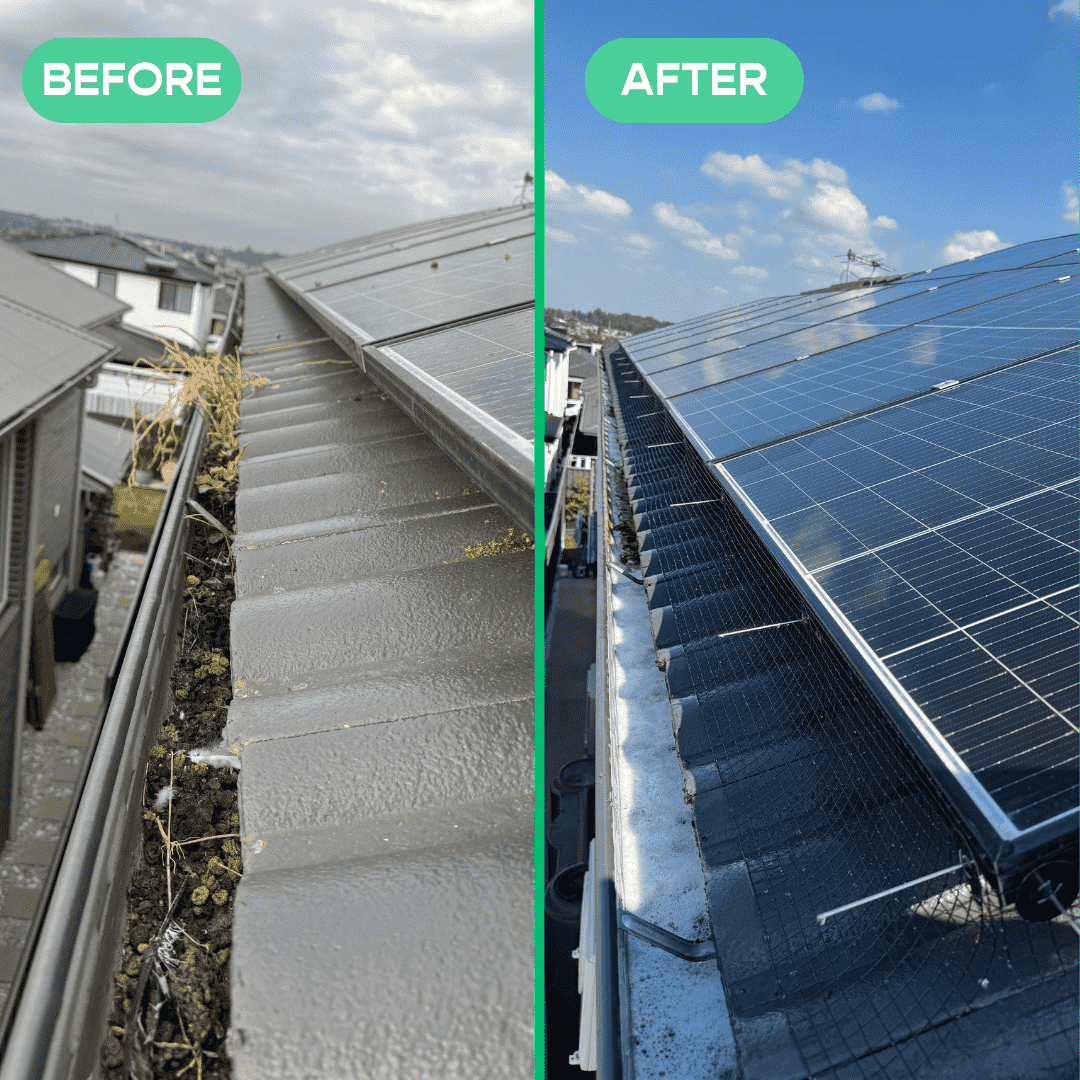
Rain is less effective against dried bird droppings, sticky tree sap, lichen, coastal salt, traffic film and dirt concentrated along the lower edges. Leaves and nesting material trapped beneath the array may not be touched by rainfall at all.
Low-pitched panels can also retain more water and dirt because runoff is slower. Therefore, rain should be considered a useful natural rinse—not a guaranteed complete clean.
2. Can Dirty Solar Panels Reduce Performance?
Dirt can block sunlight from reaching solar cells, but the effect depends on the amount, type and position of the contamination.
A thin, even layer of dust may have a relatively small effect. Concentrated contamination, such as bird droppings or leaves covering part of a panel, can create more significant shading.
Watch for persistent stains, droppings, lichen, leaves around the array or output that remains unusually low under comparable weather conditions. However, lower generation does not automatically mean the panels are dirty. Cloud cover, seasonal daylight, shade, temperature, inverter faults and electrical problems can also affect production.
Compare performance across days with similar conditions. If unusual output continues after cleaning, contact a qualified solar installer or licensed electrician rather than assuming the problem is surface dirt.
3. How Often Should Solar Panels Be Cleaned in Sydney?
There is no universal schedule; panels should be inspected and cleaned according to their surroundings, condition and manufacturer’s guidance.
A Sydney property in an open, low-dust location may need little additional cleaning. Panels near trees, the coastline, busy roads, construction sites or frequent bird activity can become dirty much faster.
An inspection may be worthwhile after an extended dry period, nearby building work, heavy bird activity or when stubborn grime remains after rain. Cleaning may also be considered before the higher-generation spring and summer months.
Follow the maintenance instructions supplied by the panel manufacturer. A condition-based approach is more reliable than automatically cleaning every system at the same interval.
4. What Is the Safest Way to Clean Solar Panels?
Use manufacturer-approved, non-abrasive methods and avoid accessing a roof unless you have the necessary training and safety equipment.
Where panels can be reached safely from the ground, gentle rinsing may remove loose dirt. Any tools or cleaning products must be suitable for solar glass and consistent with the manufacturer’s instructions, such as the maintenance guidance available from REC.
Unless specifically permitted by the manufacturer, avoid high-pressure equipment, abrasive brushes, strong chemicals and cold water on very hot panels. Never stand on panels, lean equipment against them or touch wiring and electrical connections.
Cleaning becomes considerably more dangerous when it requires climbing onto a wet, steep, fragile or second-storey roof.
5. When Should You Use a Professional Cleaner?
Professional cleaning is appropriate when access is unsafe, contamination is stubborn or debris and bird activity extend beyond the panel surface.
Professional assistance should be considered for high or steep roofs, dried droppings, lichen, heavy salt residue, recurring bird nests or debris trapped beneath the array. SafeWork NSW identifies both falls and contact with electricity as important risks associated with rooftop solar work.
A careful service should use appropriate height-safety procedures, non-abrasive equipment and methods that follow manufacturer guidance. Cleaners may also document visible concerns involving the roof, frames, mounting system or bird activity.
Surface cleaning is not electrical servicing. Wiring faults, damaged electrical components and inverter problems must be referred to a qualified solar installer or licensed electrician.
Rain provides useful natural maintenance, but it cannot reliably remove every form of contamination. If stubborn grime remains after the panels dry, a careful professional clean may provide a safer and more complete result.

- One of our client’s roof, after going through a cheap roofing work, resulting into a disastrous dirty panels scene.
Need Help On Solar Panel Cleaning in Sydney?
If you need any help with any of the items above to clean your solar panels, we at Magic Gutter provide professional solar panel cleaning for residential, commercial and strata properties across Greater Sydney, helping homeowners to use their solar panels to the their maximum efficiency Prepraring roof for winter has never been easy, so us at Magic Gutter are happy to help you on it.
Magic Gutter provides professional solar panel cleaning for residential, commercial and strata properties across Greater Sydney. Our technicians use careful, non-abrasive methods and appropriate working-at-heights procedures to remove surface dirt, bird droppings and stubborn residue.
- Award-Winning Sydney Roof Solutions Specialists — 2026.
- Fully Insured & Working at Heights Certified Team.
- Detailed Before & After Photo Documentation.
- Complimentary Roof Condition Reports.
- Professional Solar Panel Cleaning Specialists.
- Safe, Non-Abrasive Cleaning Methods.
- Trust by Residential, Commercial & Strata Clients.
- 5-Star Rated Service — Strong Reputation Across New South Wales — Sydney.